GROWTH
Understanding the developing musculoskeletal system.
Assessment considers skeletal maturity, alignment and how a condition may evolve during growth.
Dr. Raymond Joseph Malinga provides specialist orthopaedic assessment and management for musculoskeletal conditions affecting infants, children and adolescents.
Care considers growth, development, mobility, function and the long-term needs of the individual child when determining the most appropriate clinical pathway.
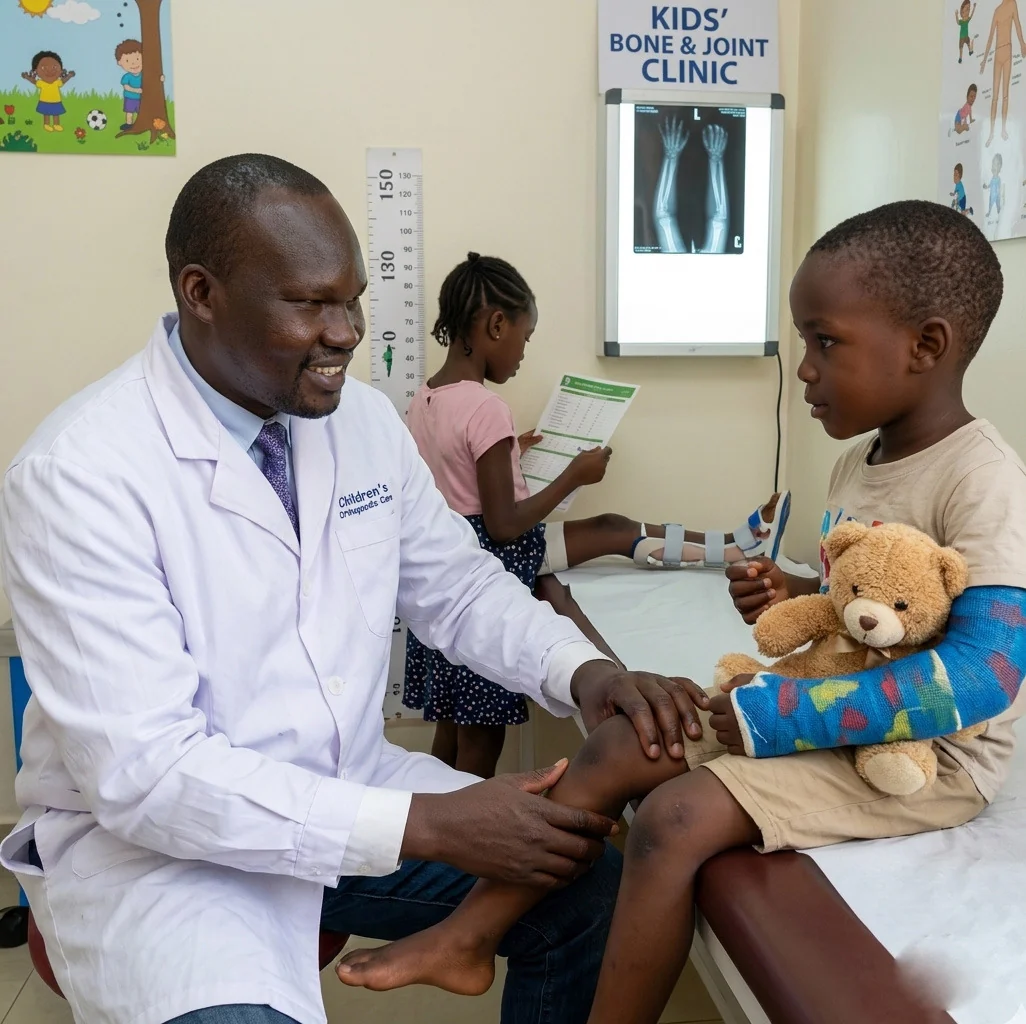
Bones, joints and muscles continue to change throughout childhood and adolescence.
Assessment therefore considers not only the presenting problem but also age, development, skeletal growth, mobility and everyday function.
The objective is to establish how the condition affects the individual child and determine an appropriate pathway for care.
Assessment considers skeletal maturity, alignment and how a condition may evolve during growth.
Walking pattern, movement, strength and participation in everyday activity help define the clinical picture.
Age, developmental stage and functional progress provide important context for clinical decision-making.
Children may present with pain, altered walking, injury, deformity or concerns affecting normal movement and development.
Specialist assessment helps determine whether the problem relates to injury, development, growth, structural abnormality or another musculoskeletal condition.
Clinical assessment brings together the child's history, development, symptoms, physical findings and functional needs.
Where appropriate, imaging and other investigations may support diagnosis and treatment planning. Findings are interpreted in relation to the child's age and skeletal development rather than in isolation.
There is no single treatment pathway for every paediatric orthopaedic condition.
Management depends on the diagnosis, age, skeletal development, severity, functional impact and expected progression during growth.
Observation, rehabilitation, activity modification or other conservative approaches may form part of treatment.
Some conditions require continued clinical review, monitoring or additional intervention as development progresses.
Operative treatment may form part of the pathway when the condition, function and wider clinical circumstances support it.
Dr. Raymond Joseph Malinga is a SICOT Fellow in Paediatric Orthopaedic Surgery.
This specialist training contributes to a clinical approach centred on careful assessment, appropriate treatment planning and preservation or restoration of function throughout childhood growth and development.
Parents and caregivers play an important role in understanding symptoms, considering treatment options and supporting recovery.
Clear communication helps families understand the clinical findings, the proposed care pathway, expected recovery and the need for follow-up as the child develops.
Specialist assessment can help clarify the problem and determine an appropriate next step.