SYMPTOMS
Understanding the clinical presentation.
Pain, stiffness, weakness, altered sensation and functional limitations help provide the initial clinical picture.
Dr. Raymond Joseph Malinga provides specialist orthopaedic assessment for spinal conditions affecting pain, mobility, posture, function and, where relevant, neurological symptoms.
Spine care begins with understanding the nature of the problem, how symptoms affect everyday activity and whether clinical examination, imaging or further investigation may help guide an appropriate treatment pathway.
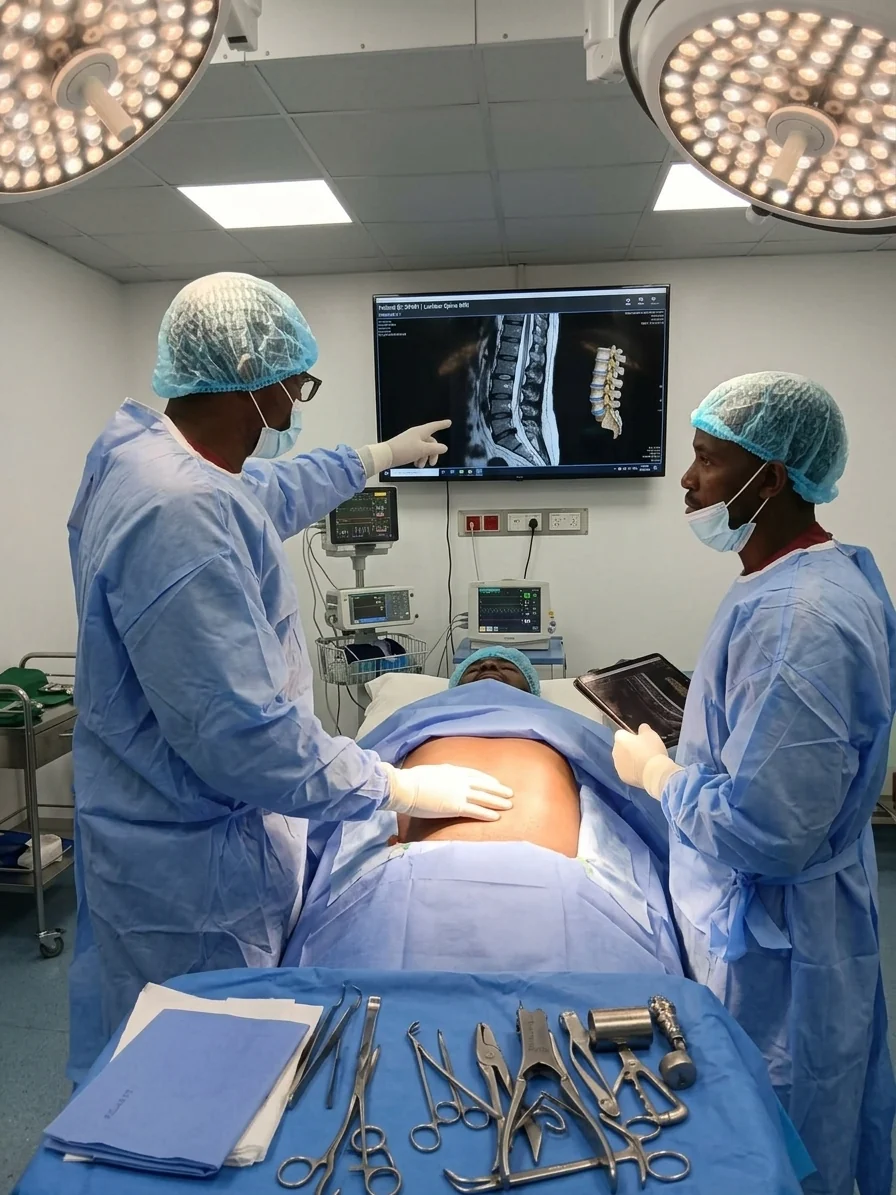
Spinal problems may present through pain, stiffness, weakness, altered sensation, reduced mobility or other changes in neurological function.
Assessment considers the pattern of symptoms together with the patient's history, physical examination, functional limitations and, where indicated, appropriate imaging or additional diagnostic investigation.
SYMPTOMS
Pain, stiffness, weakness, altered sensation and functional limitations help provide the initial clinical picture.
EXAMINATION
Clinical examination may evaluate spinal movement, strength, sensation, reflexes and the effect of symptoms on mobility.
INVESTIGATION
Imaging or other investigations may be used where clinically appropriate to clarify diagnosis and guide treatment planning.
Spinal symptoms vary widely in cause, severity, duration and effect on the individual patient.
The purpose of assessment is to identify the likely nature of the condition and determine whether observation, rehabilitation, medical treatment, procedural care or surgical evaluation may be appropriate.
Clinical assessment brings together symptoms, examination findings, functional limitations and relevant diagnostic information.
Imaging findings are interpreted within the wider clinical picture rather than considered in isolation. Treatment decisions should reflect both structural findings and how the condition affects the individual patient.
HISTORY
The history helps establish how symptoms began, their pattern, severity and effect on movement and daily function.
EXAMINATION
Clinical examination may evaluate posture, spinal movement, muscle strength, sensation, reflexes and functional ability.
IMAGING
X-ray, CT, MRI or other investigations may support diagnosis and treatment planning when clinically appropriate.
There is no single treatment pathway for every spinal condition. Management depends on diagnosis, severity, neurological findings, functional impact and the needs of the individual patient.
CONSERVATIVE CARE
Selected conditions may be managed through medication, activity modification, physiotherapy, rehabilitation or observation.
PROCEDURAL CARE
Some patients may require further procedural assessment or intervention within the wider treatment pathway.
SURGICAL CONSIDERATION
Operative treatment may be appropriate when expected benefit, structural findings and patient circumstances justify surgery.
Not every spinal condition requires surgery.
Surgical treatment may be considered when clinical findings, neurological status, structural abnormalities, functional limitations and response to previous treatment indicate that an operative pathway may offer appropriate benefit.
INDICATION
The decision to operate should be supported by appropriate clinical and diagnostic findings.
BENEFIT & RISK
Expected benefit must be considered alongside surgical risk, recovery requirements and alternative options.
PATIENT CONTEXT
Age, health, function, symptoms and personal circumstances all contribute to surgical planning.
Successful treatment often requires continued assessment beyond the initial consultation or procedure.
Follow-up allows symptoms, neurological function, mobility and rehabilitation progress to be reviewed while treatment plans can be adjusted as recovery develops.
REVIEW
REHABILITATION
FUNCTION
Spinal assessment may connect with trauma care, orthopaedic management, surgical consultation and continued rehabilitation.
NEED SPECIALIST GUIDANCE?