Fracture care focused on stability, healing and function.
Specialist assessment and management of fractures, injuries and related musculoskeletal trauma.
Dr. Malinga's trauma practice draws on hospital work at Mbale Regional Referral Hospital and hands-on trauma training through bioskills workshops facilitated by USTOP Canada.
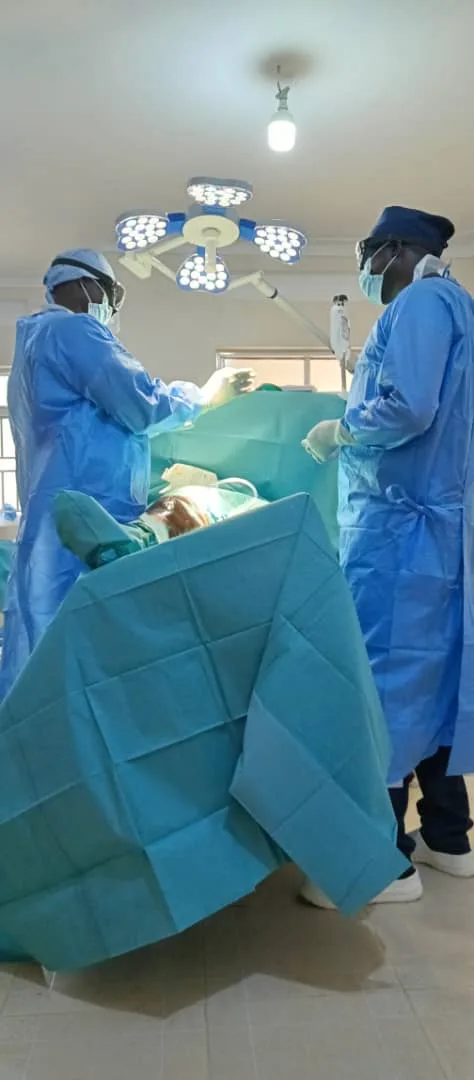
Effective fracture care begins with understanding the injury.
Assessment considers how the injury happened, the pattern of the fracture and its effect on surrounding tissues.
Examination looks at pain, swelling, deformity, circulation and nerve function, supported by X-rays and other imaging, to choose the safest and most appropriate treatment.
How it happened
The mechanism of injury suggests which structures may be affected.
Stability and tissues
Swelling, deformity, skin, circulation and nerve function are checked.
The fracture pattern
X-rays define alignment, displacement and joint involvement.
Fracture treatment matched to the injury pattern.
Not every fracture needs the same treatment. Pathways include:
Conservative management
Selected stable fractures can be treated with splints, casts or braces and regular review.
Fracture reduction
Displaced fractures may need to be realigned before they are held in place.
Surgical stabilisation
Internal or external fixation where stability, alignment or joint involvement makes surgery the better option.
Follow-up and healing
Clinical review and repeat X-rays to confirm healing and guide the return to activity.
Surgery considered through stability and function.
Operative treatment is recommended when the injury, alignment or patient circumstances make it the more reliable path to recovery.
Restoring position
Bone alignment and joint surfaces guide whether surgery is needed.
Supporting healing
Fixation can hold bone steady while it heals.
Beyond the operation
The goal is movement, independence and return to daily life.
Part of a wider orthopaedic pathway.
Conditions often overlap. These related areas may also be relevant.