ASSESSMENT
Understanding the clinical problem.
Careful history and examination help define the condition, its severity and its effect on movement and function.
Dr. Raymond Joseph Malinga provides specialist orthopaedic and surgical assessment for conditions affecting bones, joints, movement and musculoskeletal function.
Clinical care begins with understanding the problem clearly, evaluating the available information and selecting an appropriate pathway according to the individual patient’s condition and needs.
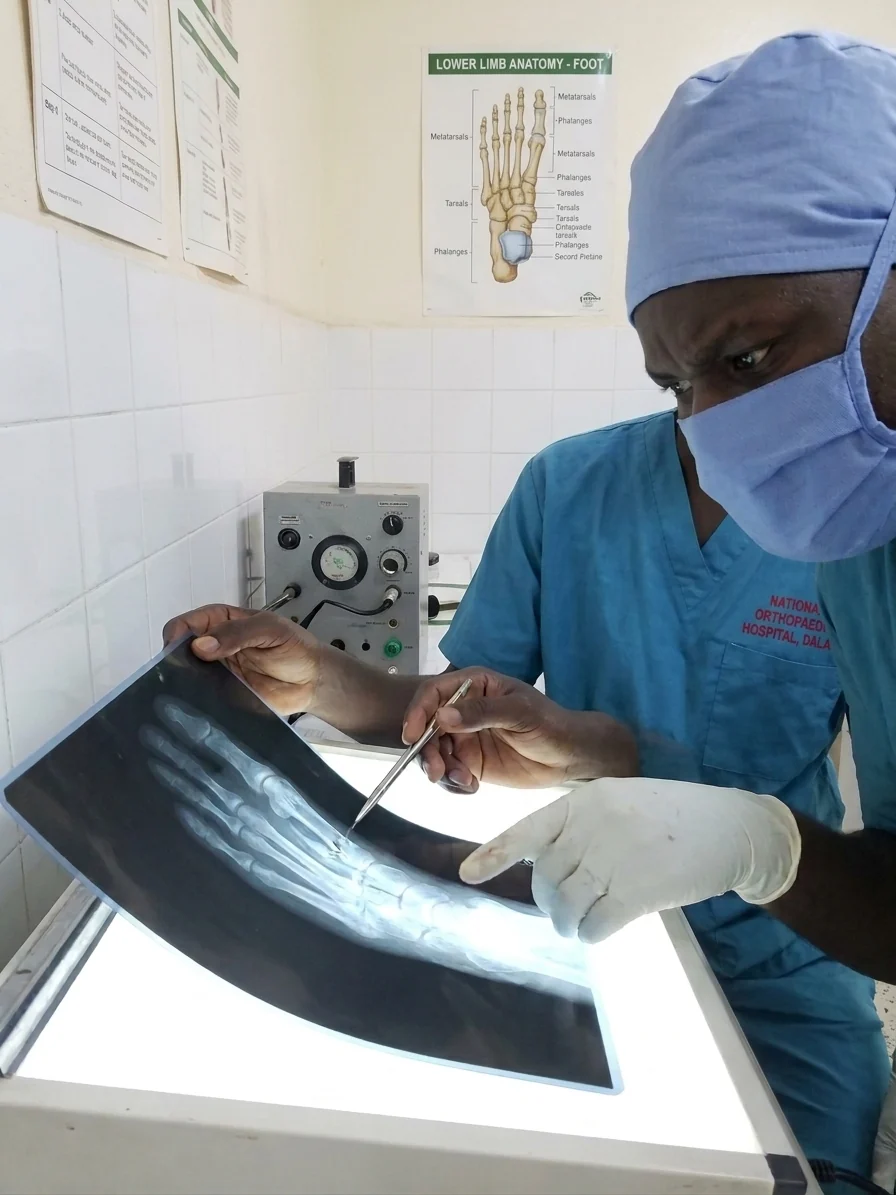
Orthopaedic assessment brings together the patient’s history, physical examination, functional limitations and appropriate diagnostic information.
The objective is not simply to identify an abnormality, but to understand how the condition affects pain, mobility, independence and everyday function before considering the most appropriate course of care.
ASSESSMENT
Careful history and examination help define the condition, its severity and its effect on movement and function.
INVESTIGATION
Imaging and other investigations are interpreted within the wider clinical picture rather than considered in isolation.
PLANNING
Treatment planning reflects the diagnosis, available options, patient needs and expected functional outcomes.
Clinical expertise extends from initial assessment through diagnosis, treatment planning, surgical consideration and follow-up.
Orthopaedic care may include conservative management, rehabilitation, procedural treatment or surgery. The appropriate path depends on the clinical findings and the individual patient.
CONSERVATIVE CARE
Where appropriate, treatment may include medication, activity modification, rehabilitation and monitored recovery.
SURGICAL CONSIDERATION
Operative treatment is considered when clinical findings, expected benefits and patient circumstances support it.
FOLLOW-UP
Clinical review, rehabilitation and functional progress help guide the continuing care pathway.
Orthopaedic recovery frequently involves communication, rehabilitation, monitoring and collaboration with other healthcare professionals.
Continuity allows progress to be reviewed, treatment plans to be refined and changing functional needs to be addressed as the patient moves through recovery.
NEED SPECIALIST GUIDANCE?